A hobby almost always starts from a shallow question and immediately becomes technical. Mine was the same as many others: but how does that thing actually stay in the air?
That question is where everything I did this year started: the exams, the choice of the drone, and the discovery that the most interesting part is not the flying, but the preparation for it.
The boring part: the exams
Before you can fly anything at all, in Europe you need the licences. I got both of them, online and without spending anything:
- A1/A3 in Luxembourg, on EUROCONTROL’s LearningZone platform: course and exam fully online, free of charge. Access lasts three months and the certificate is valid for five years across all EASA Member States.
- A2 in Spain, through AESA’s electronic headquarters: a proctored online exam, also free, once you have enrolled in the A1/A3 exam.
They are the same exams you would sit in Italy, but I sat them in the countries where the free route is simpler. The result is identical: a certificate recognised across Europe. I wrote down the whole process in how I got the licences.
The interesting part: the drone
The slowest part was the choice itself. I was looking mostly at the DJI Mini, for their versatility, but the cost made me think twice: it is the kind of purchase that, in my case, would have meant a significant expense for a hobby I did not yet know how much I would like.
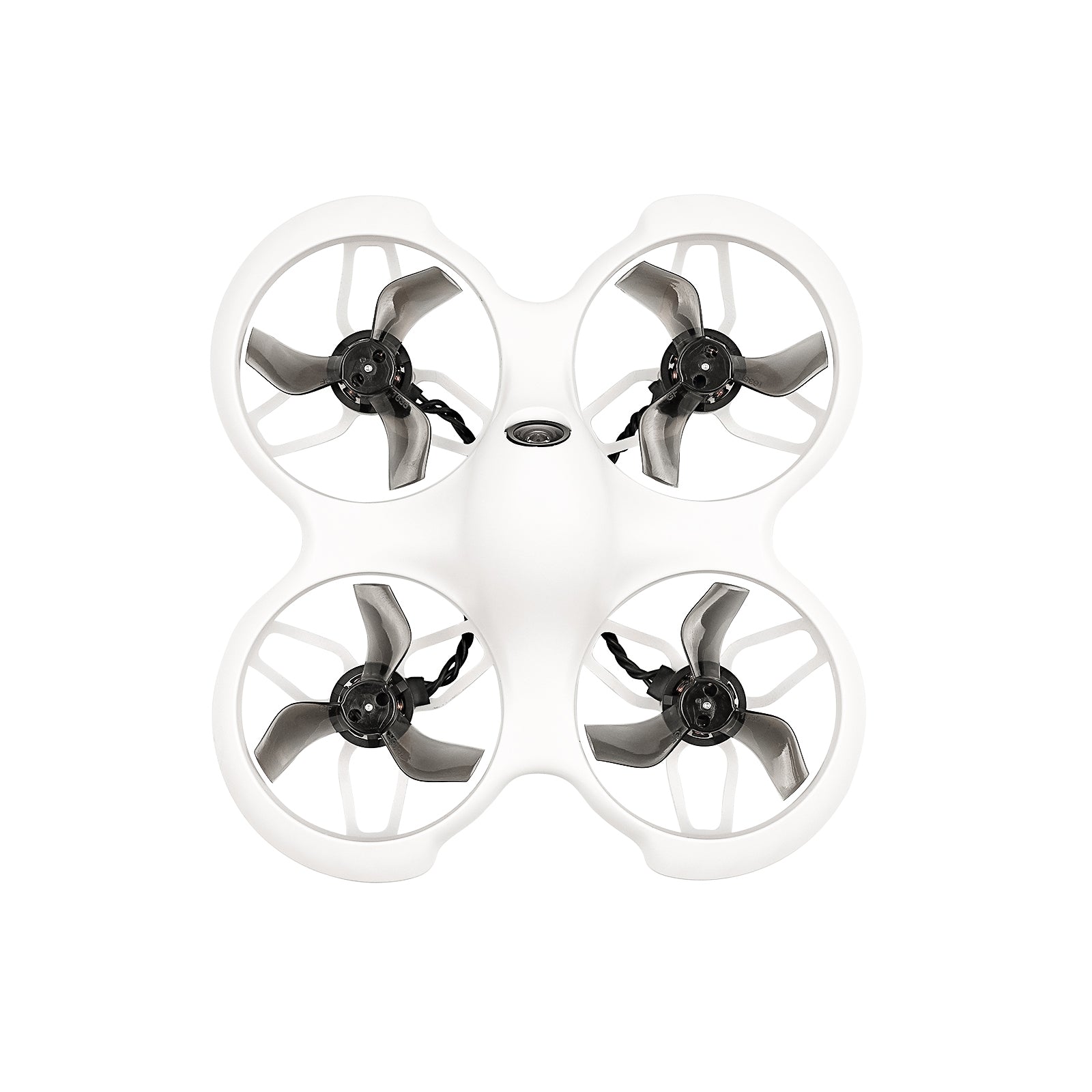
I waited for a promotion and got the BetaFPV Cetus Pro, which hit the mark: 33 grams, a contained list price, brushless, and above all the entry point into the world of FPV — the acronym stands for first person view, and it means the camera is your eye. You look through the drone.
It weighs almost nothing, has fully ducted props, and its batteries charge in minutes: it is an object designed to be used, not admired.
The part that surprised me: the simulators
This is the discovery that changed how I approach the whole thing. Before flying anything at all, I started experimenting in the simulator: FeelFPV TinyWhoop on Android and Liftoff on PC, which I covered in a dedicated article.
The key point is that the drone’s radio controller also works with the simulators. You plug the transmitter in, open Liftoff, and you are flying — with the very same joystick you will use outside. That changes the nature of the learning: you are not playing a video game, you are training the hand that will later have to fly the real thing.
How I will use the time
I don’t have a fixed plan yet, and that is fine. What I do know is the order of things: first at home, then outdoors in simple conditions, and only after that something more demanding. The garage has been the first test bench, and it is the only place where I feel free to make mistakes.
It is a project, in the full sense of the word: not a product, not a career goal. Just new ground on which to learn something that has nothing to do with what I do for a living — and for me, that is half of the reason I chose it.